
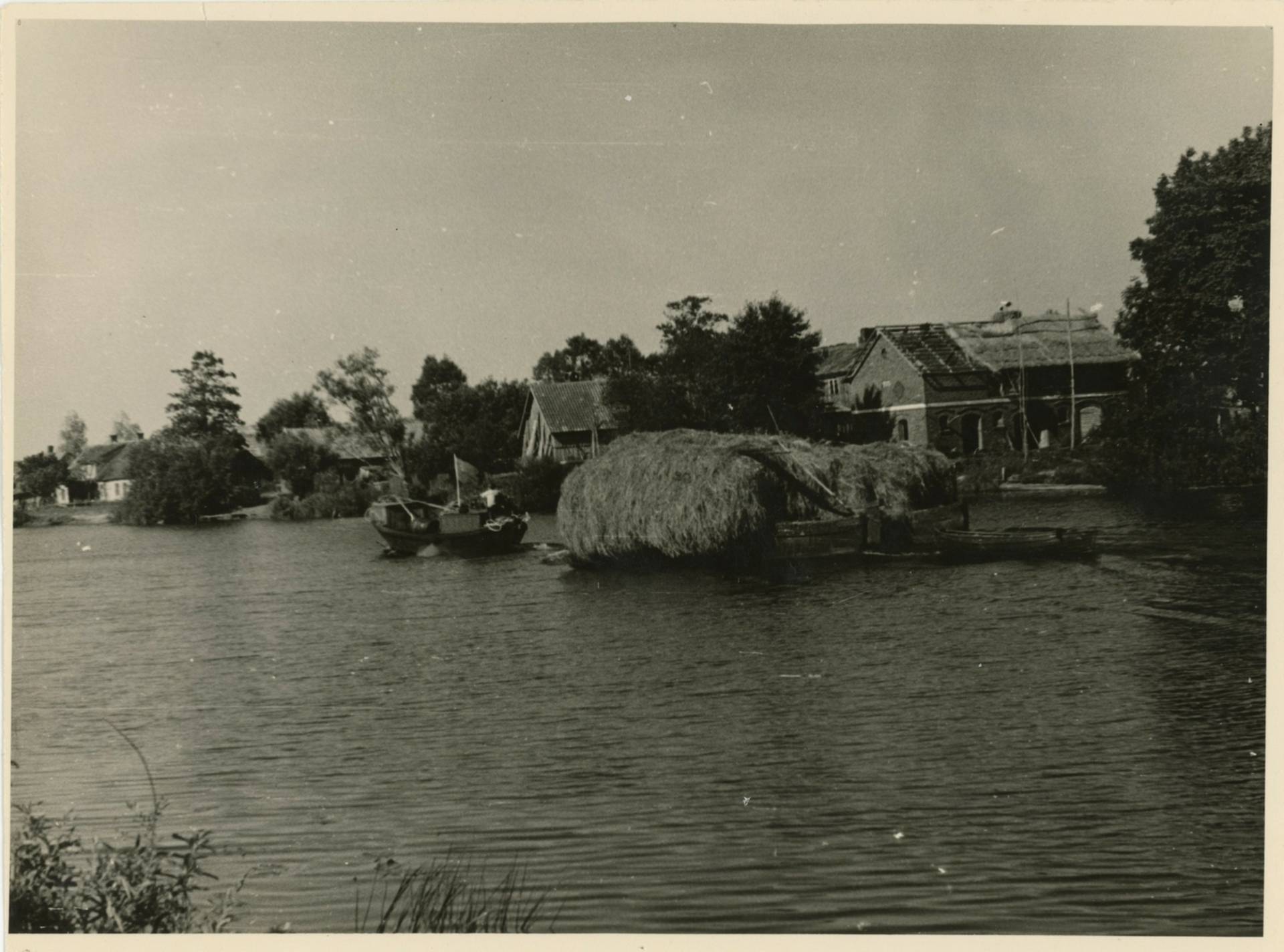
Pievininkai—this is the name that has long been used to refer to the people who lived in the lowlands of the Nemunas Delta and other floodplains. Due to constant floods and ice drifts, it was impossible to engage in conventional farming—the annual floods would wash away the plowed fields, leaving fertile alluvial soil in some places and washed-out sand in others.
However, the floods also brought their own gifts. It was noticed that these meadows were exceptionally lush. Livestock were driven here to graze, and over the centuries, the higher ridges and mounds—which remained dry even during the greatest floods—were scouted out and memorized. That is where the first camps of meadow dwellers, then outposts, and later villages and farmsteads were established. Living amidst the waters, the meadow dwellers learned to adapt to the rhythm of nature. They made their living from livestock farming, and later from commercial dairy farming; in the summers, they mowed the lush meadows and sold the hay. In marshy areas, they traveled by boat, and in the summer, cargo was hauled by horse- or ox-drawn sleds. In winter, when the marshes and waterways froze over, hay from the most remote areas was transported by sleigh.
The meadow farmers knew how to mow and dry grass even in marshy areas—they piled the hay into tall mounds on wooden platforms so that the water wouldn’t reach it. Over time, a system for trading hay even developed—it was transported to distant locations. Their lives were governed by the rhythm of the water: preparing for floods, surviving them, grazing livestock, haymaking, trading hay, and in winter—a quieter life in remote villages. Thus, over the centuries, unique customs, work skills, and a way of life took shape, which to this day bear witness to the harmony between humans and nature.