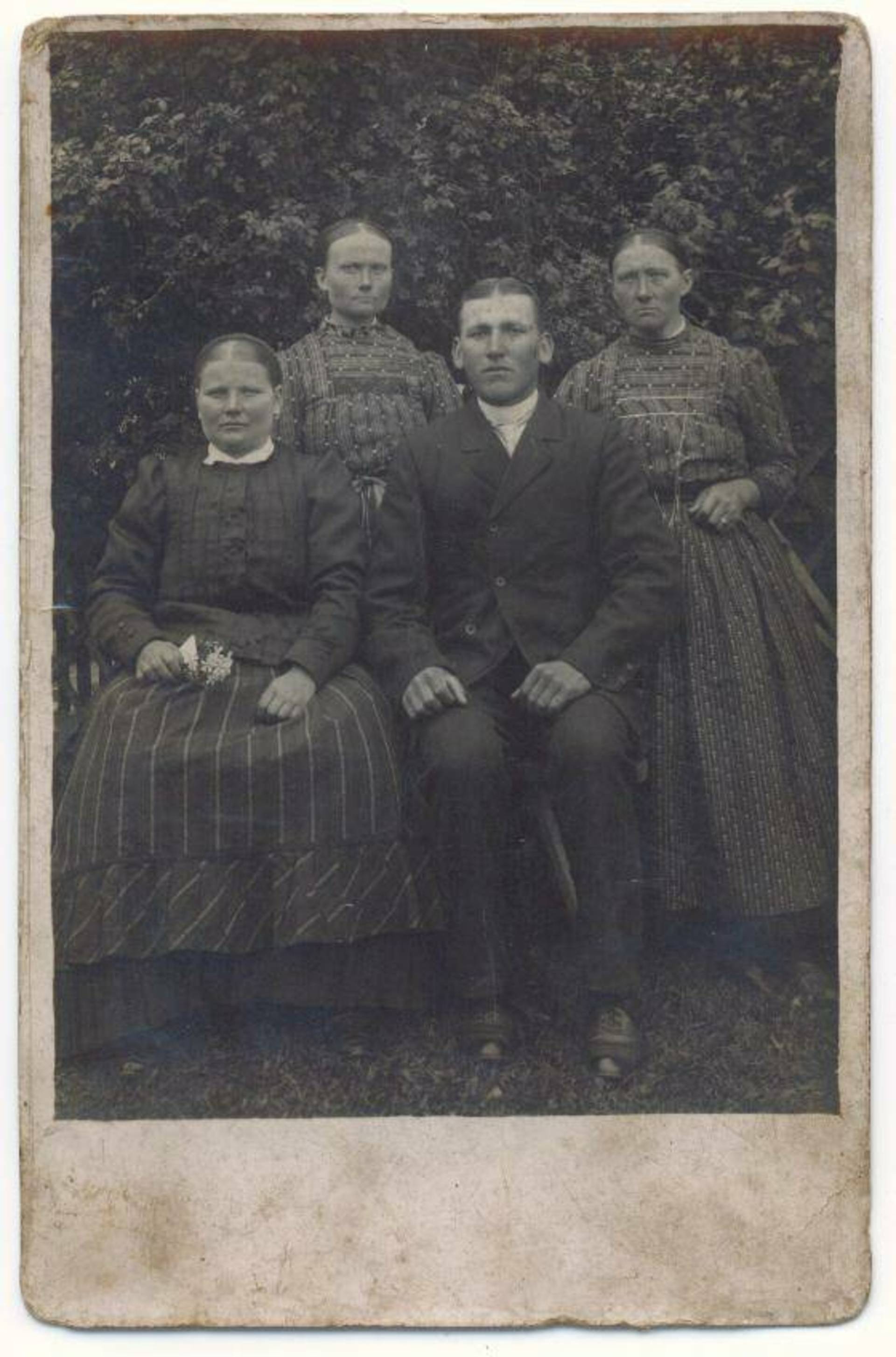
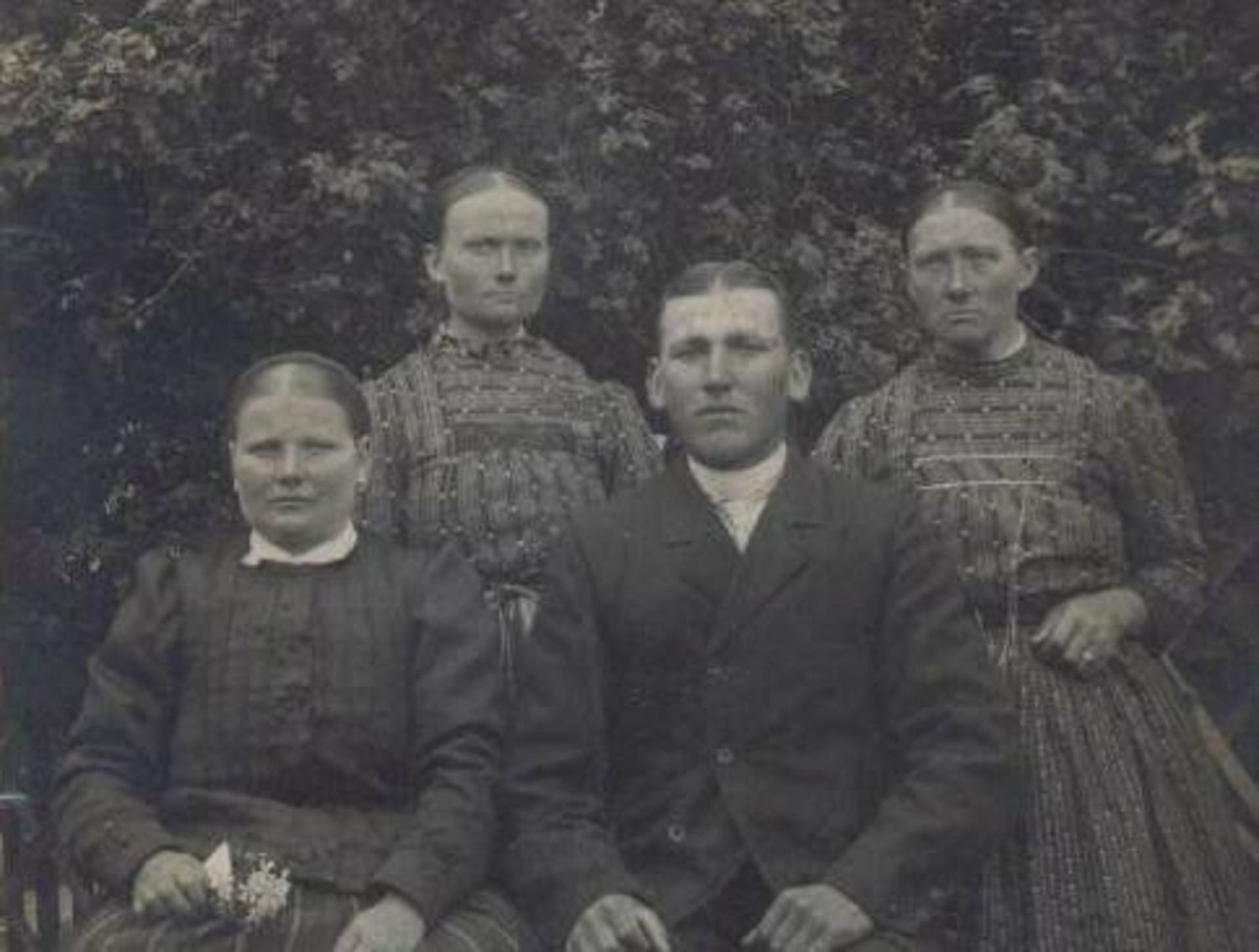
The traditional clothing of the Lithuanians in the 19th–20th centuries: the most ornate and expensive garments in Lithuania Minor were worn on Sundays and holidays. Usually, the Lithuanians of the region had their festive attire sewn when they were young, and it lasted them a lifetime. Traditional Lithuanian attire consisted of headwear, clothing, footwear, and accessories.
In the 19th century, Lithuanian women adorned themselves with dazzlingly white, fine-linen blouses. They were embroidered with black or red and black patterns at the shoulders and wrists. When it was cold, they would wear as many as three blouses: the one closest to the body was always of poorer quality, the second was of better quality, and the third, the top one, was exceptionally beautiful and thin, with sleeves embroidered with silk. In the interest of “moral education of the people,” it was forbidden to wear red or patterned clothing.
A set of men’s traditional clothing consisted of a shirt, pants, a vest, a waistcoat, a cloak, a fur coat, a head covering, and footwear. As early as the 9th–12th centuries, men’s shirts were sewn from linen cloth. In a set of festive traditional attire, the shirt served as an undergarment. Until the beginning of the 20th century, woolen, half-woolen, and linen homespun fabrics were used to make trousers. Vests began to be worn at the end of the 19th century, along with jackets. A small neckerchief was tied around the neck; it was either homespun or store-bought and made of linen, wool, cotton, or silk. Coats and jackets were the main outer garments for men, sewn from thick homespun woolen cloth.
The Lithuanian women’s delmonas—a decorated textile basket tied around the waist—served a practical purpose: women would use it to carry small items while working at home or when leaving the house. Delmonas were among the most ornate details of the traditional costume, meticulously embroidered with multicolored threads and glass beads, and adorned with meaningful text, dates, initials, and plant motifs.
Sources: Encyclopedia of Lithuania Minor, Reflections of Traditional Lithuanian Clothing and Accessories in the Works of Ieva Simonaitytė.