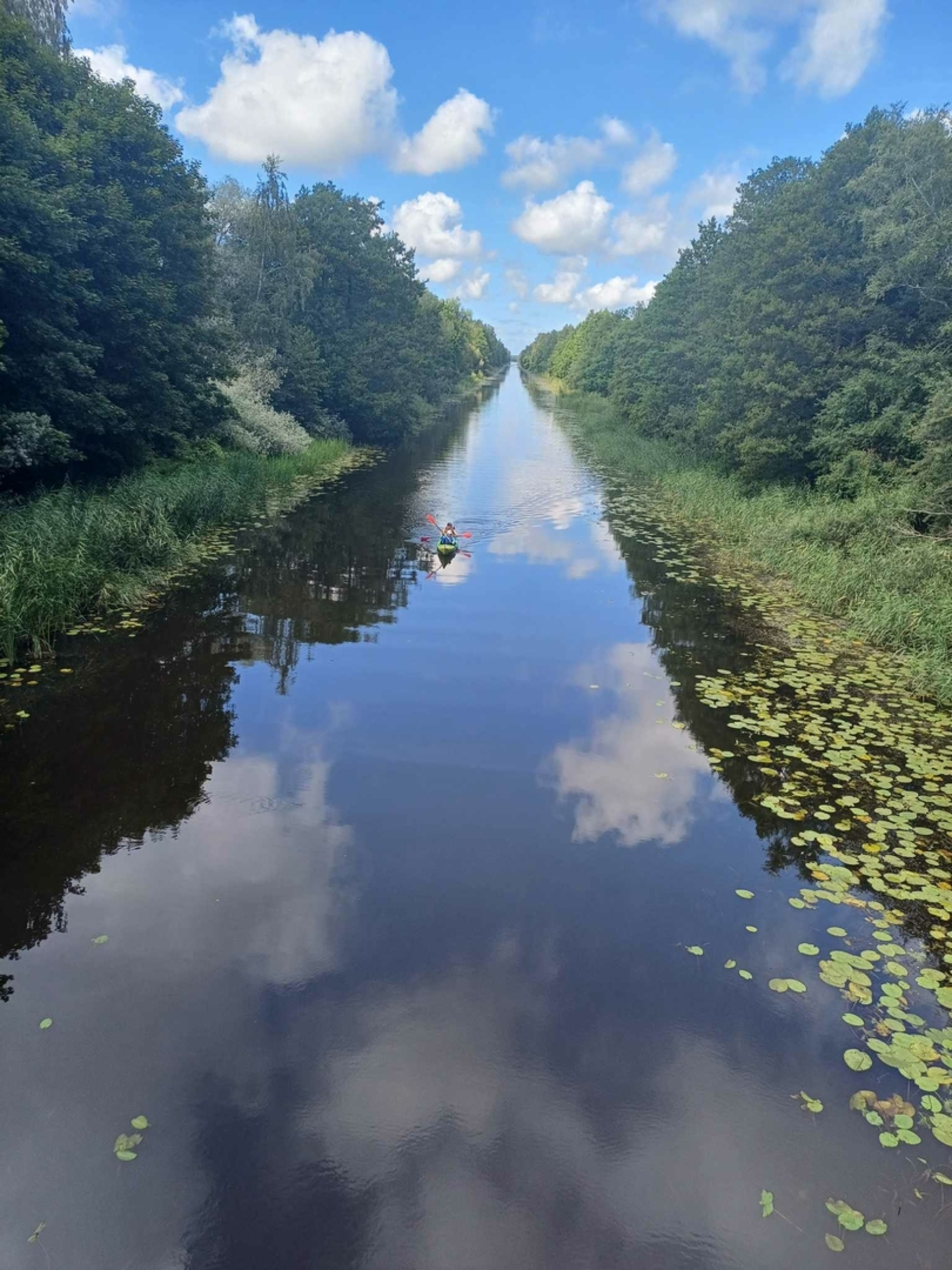
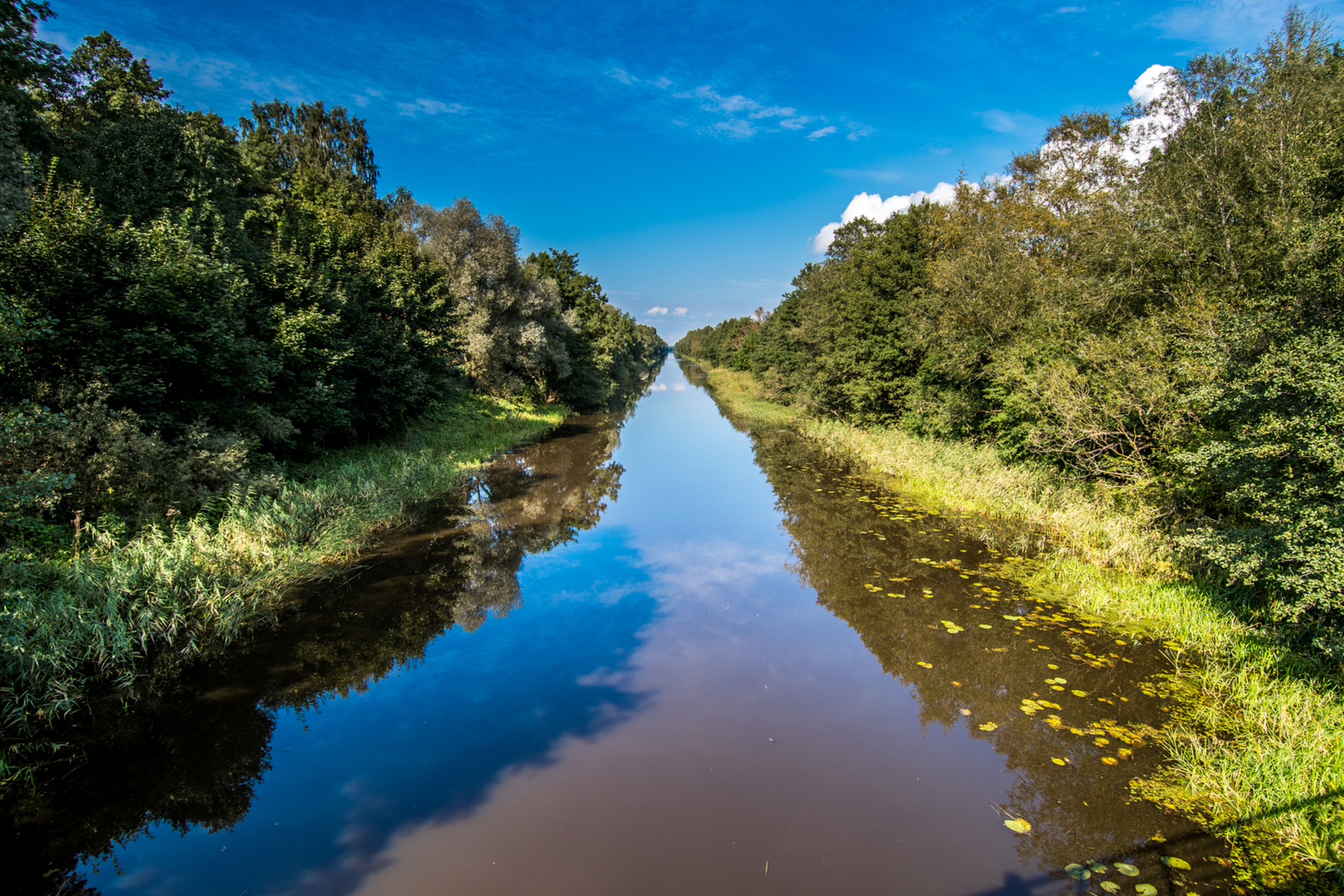
The King Wilhelm Canal is one of the great engineering achievements of the 19th century – an artificial waterway that linked the Minija River with the Curonian Lagoon. Constructed between 1863 and 1873 and named in honour of Wilhelm, the King of Prussia, it was created to solve a very real and dangerous problem.
For centuries, timber traders had transported rafts of freshly cut logs across the open waters of the lagoon and around the exposed Ventė Horn. Sudden storms often destroyed these cargoes, along with the livelihoods of those who depended on them. The canal offered a safer route – a sheltered passage carved through the landscape by local workers and by French soldiers taken prisoner during the Prussian–French War of 1870–1871.
This new waterway quickly became a vital artery for the eastern regions of Prussia and for Dreverna. It opened faster and more reliable trade routes, improved access to the Minija River, and allowed safer transportation of fish, timber, and agricultural produce.
The canal stretches for twenty-four kilometres and is between twenty-two and thirty metres wide, with depths reaching three and a half metres in places. To protect its banks from the wash of passing vessels, ships were once restricted to a speed of just 5 kilometres per hour. The journey along its calm waters took eight to nine hours – longer than crossing the lagoon in good weather, but far safer when the waves rose high. And so, whenever storms threatened, captains chose the canal.
Traffic here was once intense. Historical records show that in 1875 alone, more than a thousand ships and several thousand timber convoys passed through. Until the middle of the 20th century, it remained the main transport route for timber and many other goods.
Between 1902 and 1904, ten metal bridges were built across the canal. Today, only two of these structures survive, along with the silent remains of seven others.
Since the First World War, commercial shipping has gradually disappeared. Yet the canal has found a new purpose. Its still waters are now a peaceful route for water tourism and a favourite place for leisure fishing.