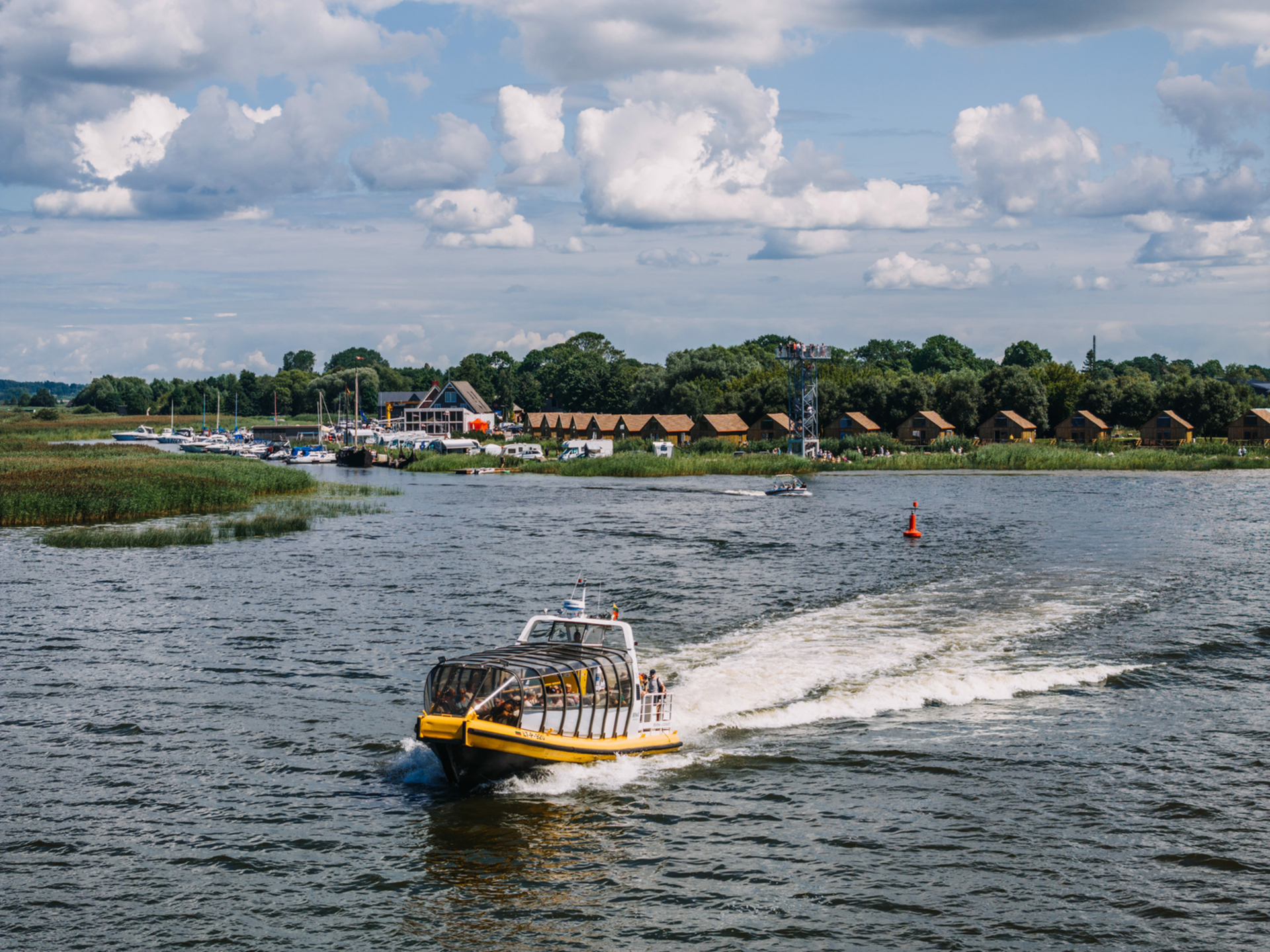
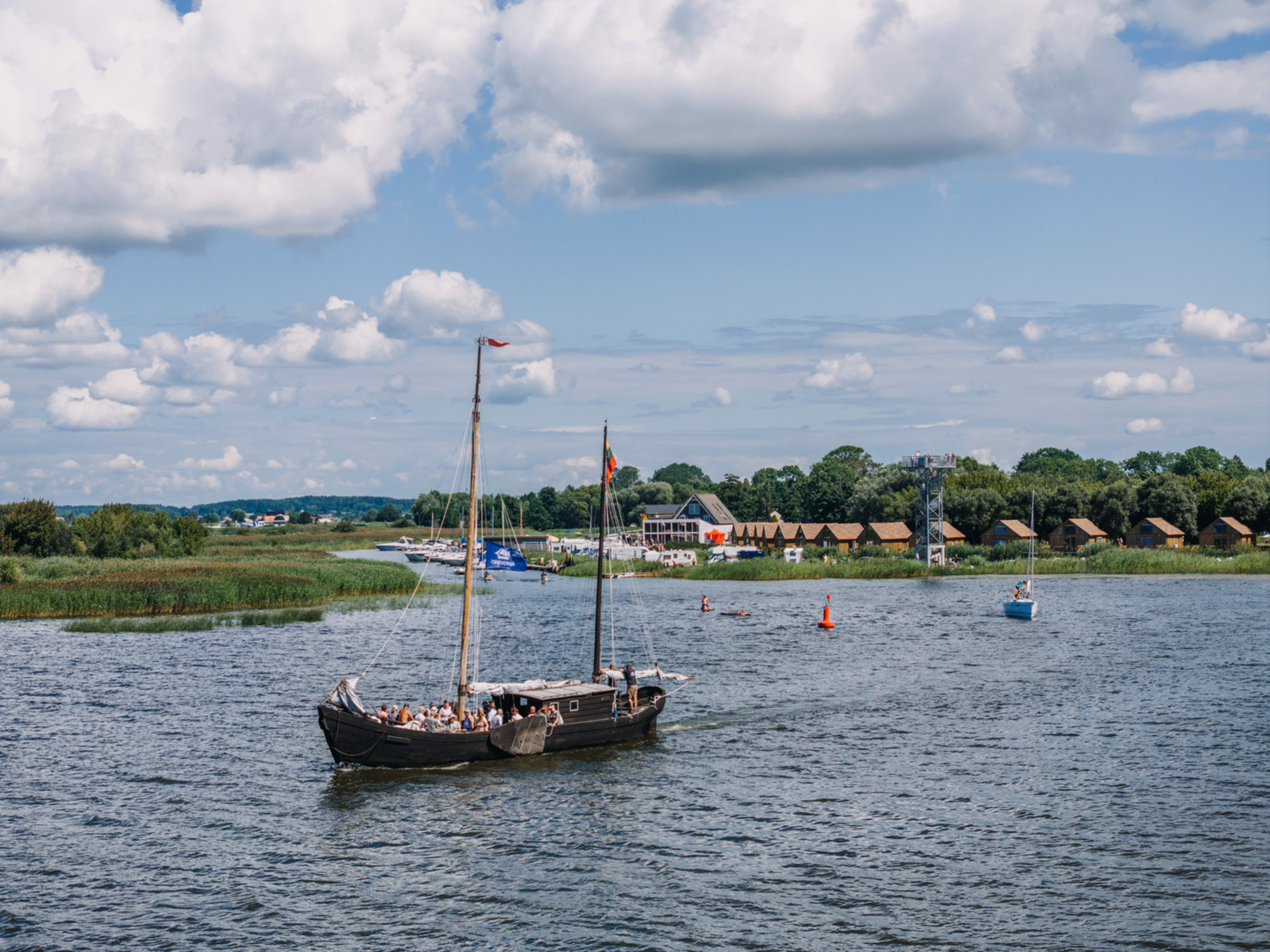
The Curonian Lagoon is the largest and most impressive body of freshwater in Lithuania – a vast, ever-changing landscape shaped by wind, water, and time. Its origins reach back to around 3000 BC, when the waves of the Baltic Sea and drifting sand gradually formed a long, narrow strip of land – the Curonian Spit. Behind this natural barrier, the waters of more than twenty rivers and streams slowly gathered, creating the lagoon we see today.
Rich in life, the lagoon has long been one of Europe’s most fertile fishing grounds, home to around fifty species of fish. Today, however, these natural resources are carefully protected, and strict limits on commercial fishing help preserve this fragile ecosystem for the future.
Only the northern part of the lagoon belongs to Lithuania; the larger southern area lies within the territory of Russia. Yet along the Lithuanian shore, the lagoon has become a place of rest, discovery, and cultural memory.
On the Curonian Spit stand the historic settlements of Nida, Juodkrantė, Pervalka, and Preila – once fishermen’s villages, now distinctive resorts where traditional wooden houses, boats, and weathervanes preserve the spirit of the past. On the opposite mainland shore, Dreverna and Svencelė have been reborn as lively centres for sailing, kitesurfing, and waterside leisure.
The lagoon is also inseparable from the story of Klaipėda’s port. At the narrow strait where the lagoon meets the Baltic Sea lies the Klaipėda State Seaport, a site of strategic importance. Although the lagoon itself is shallow – its average depth just 3.7 metres – the port’s navigation area has been deepened to 14.5 metres to accommodate large seagoing vessels.
Not far from the shipping route rises a small island with an unusual name – Kiaulės Nugara, or Pig’s Back Island. Beside it stands the liquefied natural gas terminal, a structure that has become crucial for the energy independence of the Baltic region.
And yet, despite modern industry and ongoing discussions about building a bridge, the most evocative way to reach the Curonian Spit has remained unchanged. Throughout the year, ferries and small boats carry passengers and cars across the water from Klaipėda. This short crossing has become a timeless ritual for both the visitors and the locals.